Last Updated on August 24, 2026 by jparadiso
What Is Email Blacklist Monitoring and Why Your Sending Domain Needs It
Email blacklist monitoring is the continuous process of checking if your sending domain’s IP address or domain name has been listed on any public or private spam blacklists. This proactive measure is crucial for maintaining strong email deliverability, protecting your sender reputation, and ensuring your marketing and transactional emails consistently reach recipients’ inboxes rather than their spam folders.
What is Email Blacklist Monitoring?
Email blacklist monitoring involves systematically checking various blacklists to see if your domain or IP address appears on them. These blacklists are databases compiled by anti-spam organizations, internet service providers (ISPs), and email security vendors, listing IP addresses and domains identified as sources of spam or malicious email activity. When your sending infrastructure is listed, it signals to receiving mail servers that emails originating from you might be unsolicited or harmful, leading to them being blocked, quarantined, or sent directly to spam. Effective email blacklist monitoring acts as an early warning system, alerting you to potential issues before they severely impact your email campaigns and overall email deliverability.
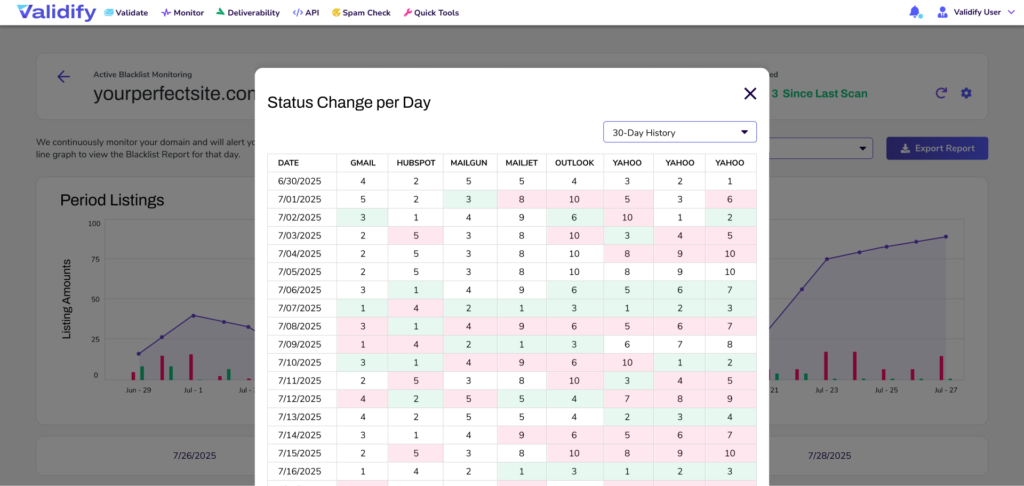
The process typically involves automated tools that regularly scan these blacklists. If a listing is detected, the monitoring service notifies you, allowing for prompt action. This is a critical component of a comprehensive email health strategy, working in tandem with other practices like email validation and DMARC monitoring to safeguard your sender reputation.
Why is Email Blacklist Monitoring Essential for Your Sending Domain?
For any business relying on email communication – from marketing campaigns to transactional notifications – maintaining a pristine sender reputation is paramount. A poor reputation, often triggered by a blacklist listing, directly translates to reduced inbox placement. When your domain or IP is blacklisted, email service providers (ESPs) and ISPs are far more likely to reject your emails or route them to the spam folder, regardless of their content or the recipient’s intent. This can severely cripple your campaign success.
The consequences extend beyond just lost emails. Being blacklisted can damage your brand’s credibility, lead to significant operational disruptions, and require considerable time and resources for remediation. Proactive email blacklist monitoring helps you identify and address these issues swiftly, minimizing the damage and preserving your ability to communicate effectively with your audience. It’s a preventative measure that protects your digital communication channels and ensures your messages reach their intended recipients reliably.
How Do Email Blacklists Work?
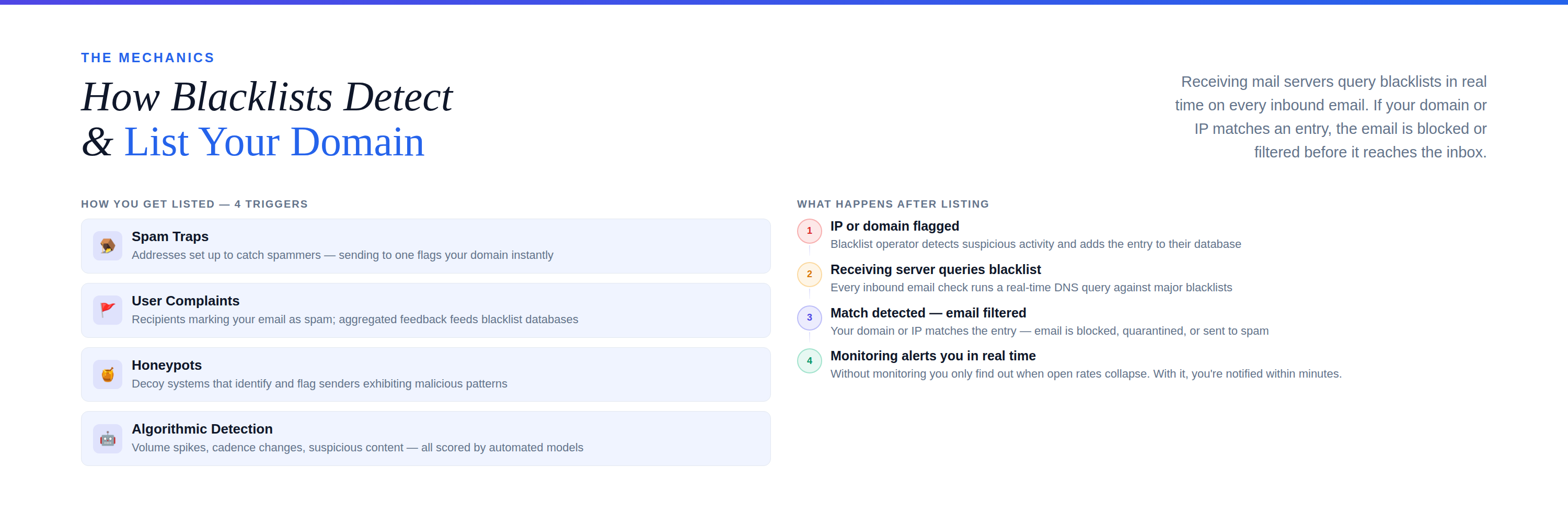
Email blacklists operate by collecting and sharing data on IP addresses and domains that exhibit spam-like behavior. This behavior can include sending unsolicited bulk email, having high bounce rates, sending to spam traps, or being associated with phishing and malware distribution. The data is gathered through various mechanisms:
- Spam Traps: These are email addresses specifically set up to catch spammers. Sending an email to a spam trap instantly flags your sender as suspicious.
- User Complaints: When recipients mark your emails as spam, this feedback is aggregated and can contribute to a blacklist listing.
- Honeypots: Similar to spam traps, these are decoy systems designed to attract and identify malicious actors.
- Algorithmic Detection: Advanced algorithms analyze email sending patterns, volume, frequency, and content to identify suspicious activity.
Once an IP or domain is identified as a potential threat, it gets added to a blacklist database. Receiving mail servers then query these blacklists in real-time. If your sending IP or domain matches an entry on a consulted blacklist, the receiving server will likely block or filter your email. Different blacklists have varying criteria and update frequencies, making comprehensive monitoring essential. Understanding this mechanism underscores the importance of email deliverability best practices and diligent list cleaning.
Types of Email Blacklists: A Closer Look
Not all blacklists are created equal. They vary in their criteria, impact, and the organizations that maintain them. Understanding the distinctions is crucial for effective email blacklist monitoring.
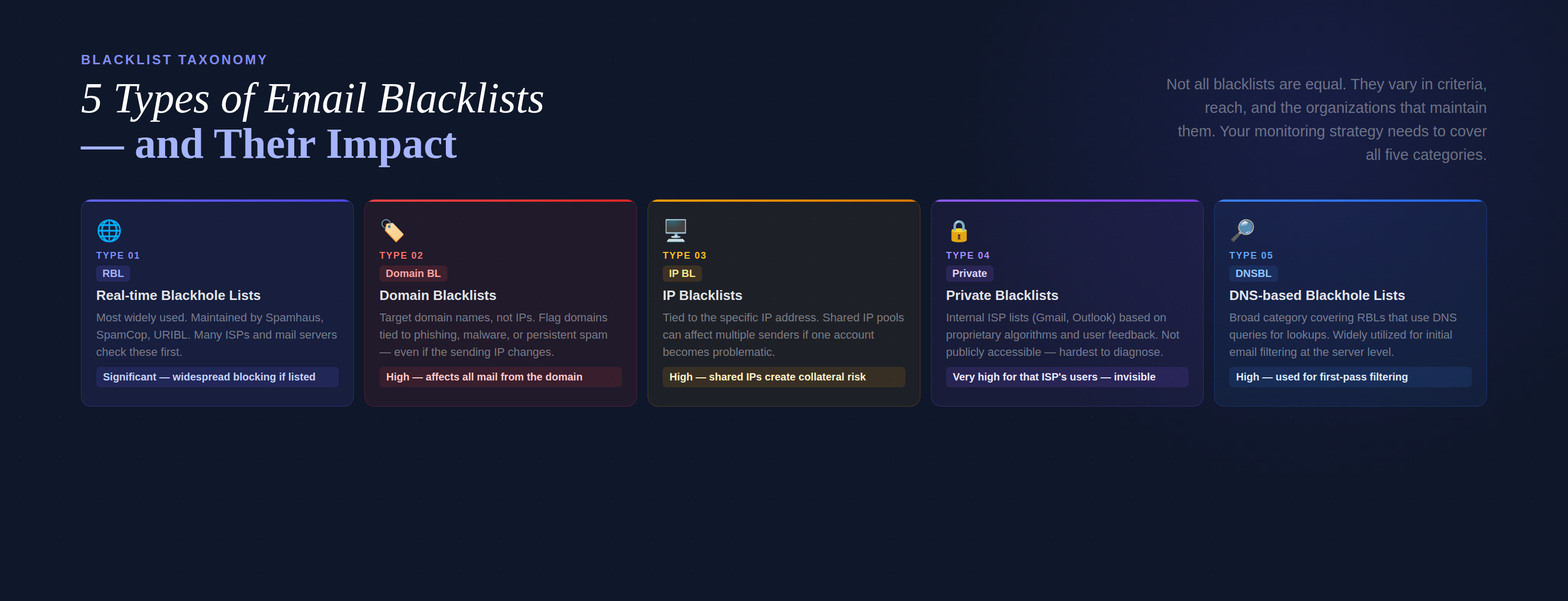
Table: Common Types of Email Blacklists
| Blacklist Type | Description | Impact |
|---|---|---|
| Real-time Blackhole Lists (RBLs) | These are the most common and widely used blacklists, often maintained by organizations like Spamhaus, SpamCop, and URIBL. They list IP addresses known for sending spam or hosting spam-related content. | Significant; many ISPs and mail servers check RBLs, leading to widespread blocking if listed. |
| Domain Blacklists | These lists specifically target domain names rather than IP addresses. They typically flag domains associated with phishing, malware, or persistent spam campaigns, even if the sending IP changes. | High; can impact all emails sent from the listed domain, regardless of the sender’s IP. |
| IP Blacklists | These focus on the specific IP address used to send emails. An IP might be blacklisted if it’s been compromised, used by a spambot, or exhibits high spam complaint rates. | High; directly affects the ability of emails sent from that IP to reach inboxes. Shared IP pools can affect multiple senders if one is problematic. |
| Private Blacklists | Maintained by individual ISPs (e.g., Gmail, Outlook.com) for their internal use. These are not publicly accessible and are based on their own proprietary algorithms and user feedback. | Very high for emails sent to that specific ISP’s users; difficult to diagnose without direct feedback or advanced DMARC monitoring and diagnostic tools. |
| DNS-based Blackhole Lists (DNSBLs) | A broader term for RBLs, using DNS queries to check if an IP or domain is listed. They often include various types of RBLs. | High; widely utilized for initial email filtering. |
Each type plays a role in identifying and mitigating spam, and your email blacklist monitoring strategy should ideally cover a broad spectrum of these lists to ensure comprehensive protection for your sending domain.
What Are the Consequences of Being Blacklisted?
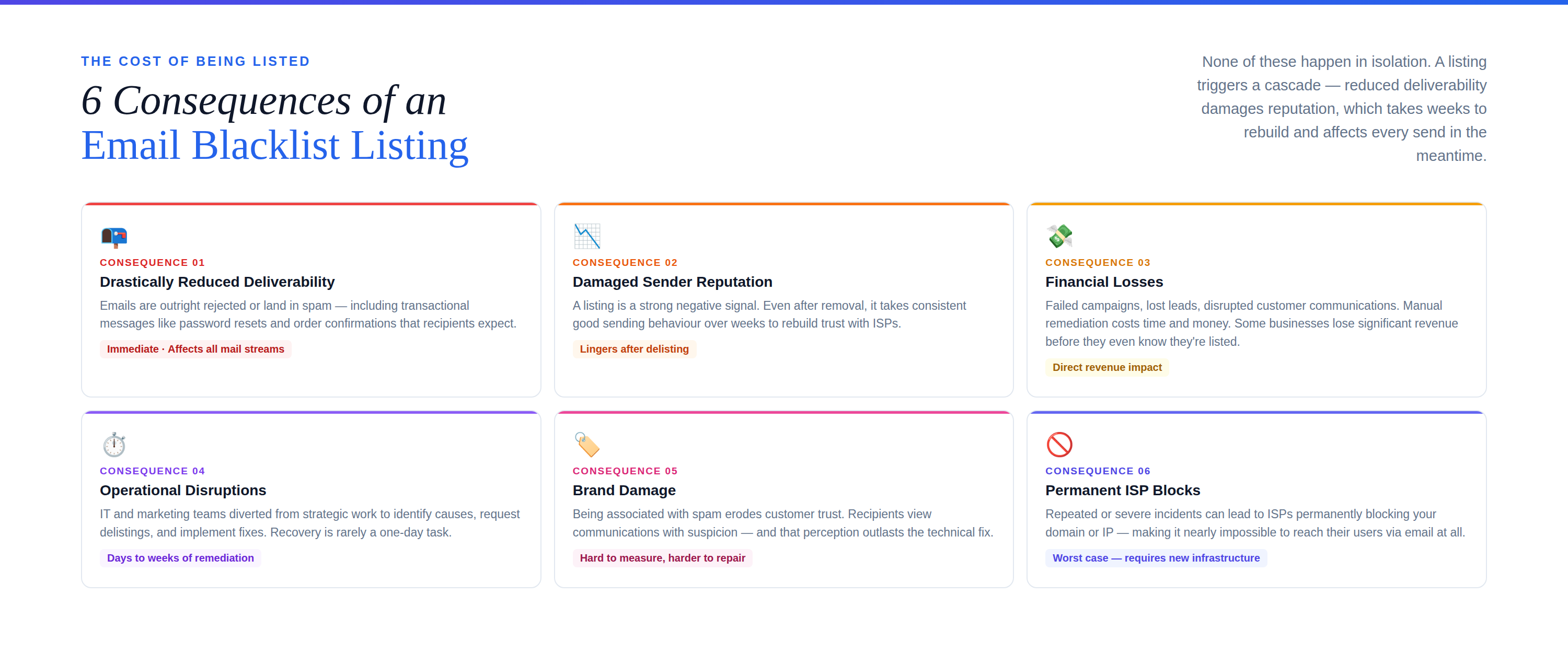
The repercussions of landing on an email blacklist can be severe and far-reaching, impacting various aspects of your business operations and email marketing efforts. Here’s a breakdown of the primary consequences:
- Drastically Reduced Email Deliverability: This is the most immediate and impactful consequence. When your IP or domain is blacklisted, a significant portion of your emails will either be outright rejected by recipient servers or land directly in spam folders. This means your crucial transactional emails (password resets, order confirmations), marketing newsletters, and customer service communications may never reach their intended audience.
- Damaged Sender Reputation: A blacklist listing is a strong negative signal that severely degrades your sender reputation. Even after removal from a blacklist, it takes time and consistent good sending practices to rebuild trust with ISPs. A poor reputation can lead to ongoing inbox placement issues, even for legitimate emails.
- Financial Losses: Reduced deliverability directly impacts your bottom line. Marketing campaigns fail to generate leads or sales, customer retention efforts suffer, and critical business communications are disrupted. The cost of manual remediation and potential lost business can be substantial.
- Operational Disruptions: Your IT and marketing teams will need to dedicate significant resources to identify the cause of the listing, request delisting, and implement corrective measures. This diverts valuable time and effort from other strategic initiatives.
- Brand Damage: Being associated with spam erodes customer trust and tarnishes your brand image. Recipients may view your communications with suspicion, and the brand’s perceived professionalism can suffer.
- Potential for ISP Blocks: Repeated or severe blacklisting incidents can lead to ISPs permanently blocking your domain or IP, making it nearly impossible to communicate with their users via email.
These consequences highlight why proactive email blacklist monitoring is not just a best practice but a business imperative for maintaining healthy email channels and ensuring campaign success.
How to Implement Effective Email Blacklist Monitoring
Implementing a robust email blacklist monitoring strategy involves more than just occasional checks; it requires a systematic approach. Here are key steps:
- Choose a Reliable Monitoring Tool: Select a dedicated service or marketing tool that specializes in email health and blacklist monitoring. These tools typically integrate with numerous blacklists and provide automated alerts.
- Monitor All Relevant Sending Entities: Ensure you are monitoring all IP addresses and domains you use for sending emails. This includes dedicated IPs, shared IPs (if you use an ESP), and all subdomains associated with your primary domain.
- Set Up Real-time Alerts: Configure your monitoring solution to send immediate notifications (via email, SMS, or dashboard alerts) the moment your domain or IP appears on a blacklist. Timeliness is critical for rapid response.
- Regular Reporting and Analysis: Review daily, weekly, or monthly reports provided by your monitoring service. Look for trends, potential vulnerabilities, and the overall health of your sender reputation.
- Integrate with Email Deliverability Tools: Combine blacklist monitoring with other email deliverability diagnostics like DMARC monitoring, spam check tools, and email validation services for a holistic view of your email infrastructure.
- Establish a Remediation Plan: Have a clear, predefined process for what to do if you get blacklisted. This includes identifying the cause, ceasing problematic sending, requesting delisting, and implementing preventative measures.
By following these steps, you can establish an efficient and preventative system for safeguarding your email communications. Solutions leveraging AI-powered analytics can offer even deeper insights and more rapid detection capabilities.
Beyond Monitoring: Proactive Strategies for Maintaining a Clean Sender Reputation
While email blacklist monitoring is crucial for detection, a truly effective email health strategy extends to proactive measures that prevent listings in the first place. These strategies are fundamental to long-term inbox placement and campaign success:
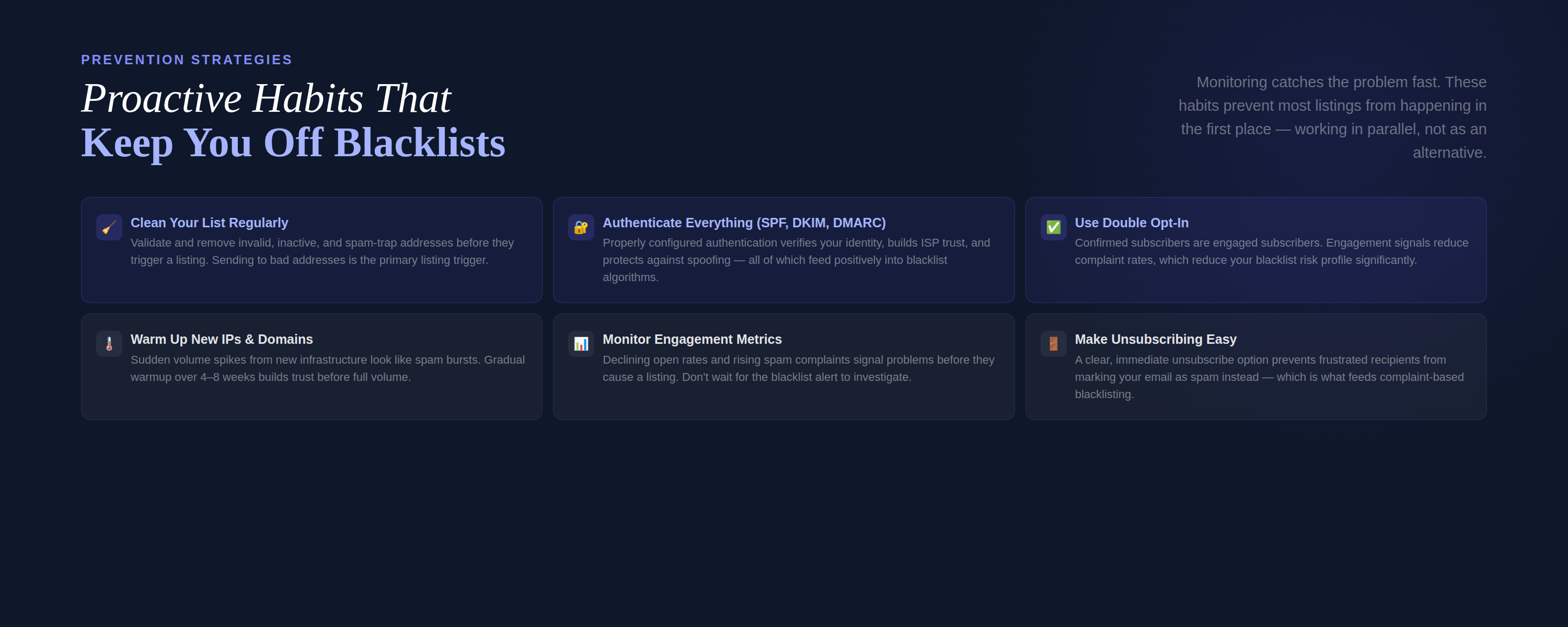
- Maintain a Clean Email List: Regularly perform list cleaning using an email validation service. Remove invalid, inactive, or spam trap email addresses. Sending to a high percentage of bad addresses is a primary trigger for blacklisting.
- Implement Double Opt-in: Require subscribers to confirm their subscription via email. This verifies their interest and reduces the likelihood of spam complaints.
- Segment Your Audience: Send targeted content to relevant segments. This increases engagement and reduces recipients marking your emails as spam.
- Monitor Engagement Metrics: Keep a close eye on open rates, click-through rates, and unsubscribe rates. Declining engagement or rising unsubscribe rates can signal content issues that might lead to spam complaints.
- Authenticate Your Emails (SPF, DKIM, DMARC): Properly configure Sender Policy Framework (SPF), DomainKeys Identified Mail (DKIM), and Domain-based Message Authentication, Reporting & Conformance (DMARC). These protocols verify your sending identity, build trust with ISPs, and protect against spoofing. DMARC monitoring is particularly vital for receiving reports on authentication failures.
- Warm Up New IPs/Domains: If you’re using a new sending IP or domain, gradually increase your sending volume to build a positive reputation with ISPs rather than sending large volumes immediately.
- Provide a Clear Unsubscribe Option: Make it easy for users to opt out. Forcing them to jump through hoops can lead them to mark your email as spam instead.
- Avoid Spammy Content: Steer clear of excessive capitalization, exclamation points, spam trigger words, and broken HTML that can flag your emails with spam check filters.
- Regularly Review Your Sending Practices: Periodically audit your email sending processes, content, and list acquisition methods to ensure compliance with best practices and regulations.
By integrating these proactive measures with diligent email blacklist monitoring, you create a robust defense against deliverability issues, ensuring your data quality supports your marketing and communication goals.
Choosing the Right Email Blacklist Monitoring Solution
Selecting the appropriate tool for email blacklist monitoring is a critical decision that impacts your overall email deliverability and sender reputation. When evaluating options, consider the following features and benefits:
- Comprehensive Blacklist Coverage: Does the solution monitor a wide array of global and regional blacklists, including major RBLs and domain blacklists? The more comprehensive, the better your protection.
- Real-time Alerting: Immediate notifications are crucial. Look for systems that offer instant alerts via multiple channels (email, SMS, API) when a listing is detected.
- Ease of Use and Dashboard: A clear, intuitive dashboard that provides actionable insights into your email health is essential. You should be able to quickly see the status of your monitored IPs and domains.
- Integration Capabilities: Can it integrate with your existing marketing tools or IT solutions? API access for custom integrations can be a significant advantage.
- Historical Data and Reporting: Access to historical data helps you track trends in your sender reputation and diagnose recurring issues. Robust reporting features are also valuable for internal communication and strategy.
- Delisting Guidance: Does the solution offer guidance or support in the delisting process? Some providers may offer more hands-on assistance.
- AI-powered Analytics: Advanced solutions leverage AI-powered analytics to detect subtle anomalies, predict potential issues, and provide deeper insights into your sending patterns and reputation.
- Security and Reliability: Ensure the provider adheres to high standards of security and has a reliable infrastructure to ensure continuous monitoring.
- Cost-Effectiveness: Evaluate the pricing structure against the features offered and your budget. Consider the long-term value in protecting your email channels.
By carefully assessing these factors, you can choose an email blacklist monitoring solution that effectively safeguards your sending domain, ensuring your emails reach their intended recipients and contribute positively to your campaign success. Validify offers real-time and secure solutions designed to enhance your email deliverability and protect your sender reputation through comprehensive monitoring and diagnostic tools.
Protect your email deliverability and sender reputation today. Explore Validify’s advanced email health solutions.