Content Spam Check

Write Emails That Reach Inboxes

Validify’s Content Spam Check identifies hidden spam triggers, assigns a risk score, and recommends targeted fixes. The result: messages that get noticed—not blocked.

Content spam check identies hidden spam triggers, assigns risk score, messesage get delivered

Your Content Can Make or Break Deliverability

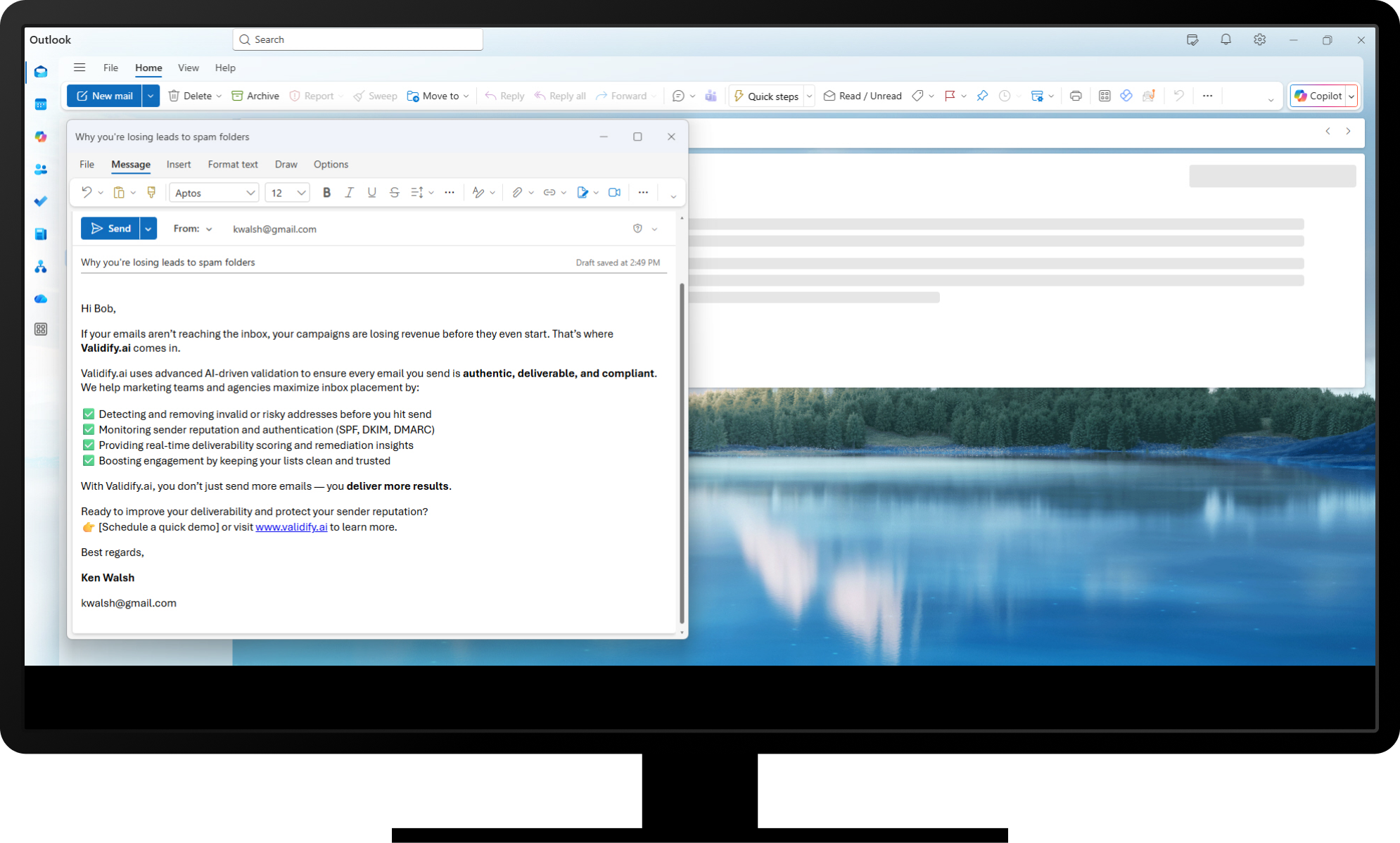
Even if your list is clean, poor email content can send your campaign straight to the spam folder. Knowing how to avoid words, formatting, links, and more that could raise red flags can improve your inbox placement, open rates, and overall campaign performance.

Email content issues can cause spam scores to be low
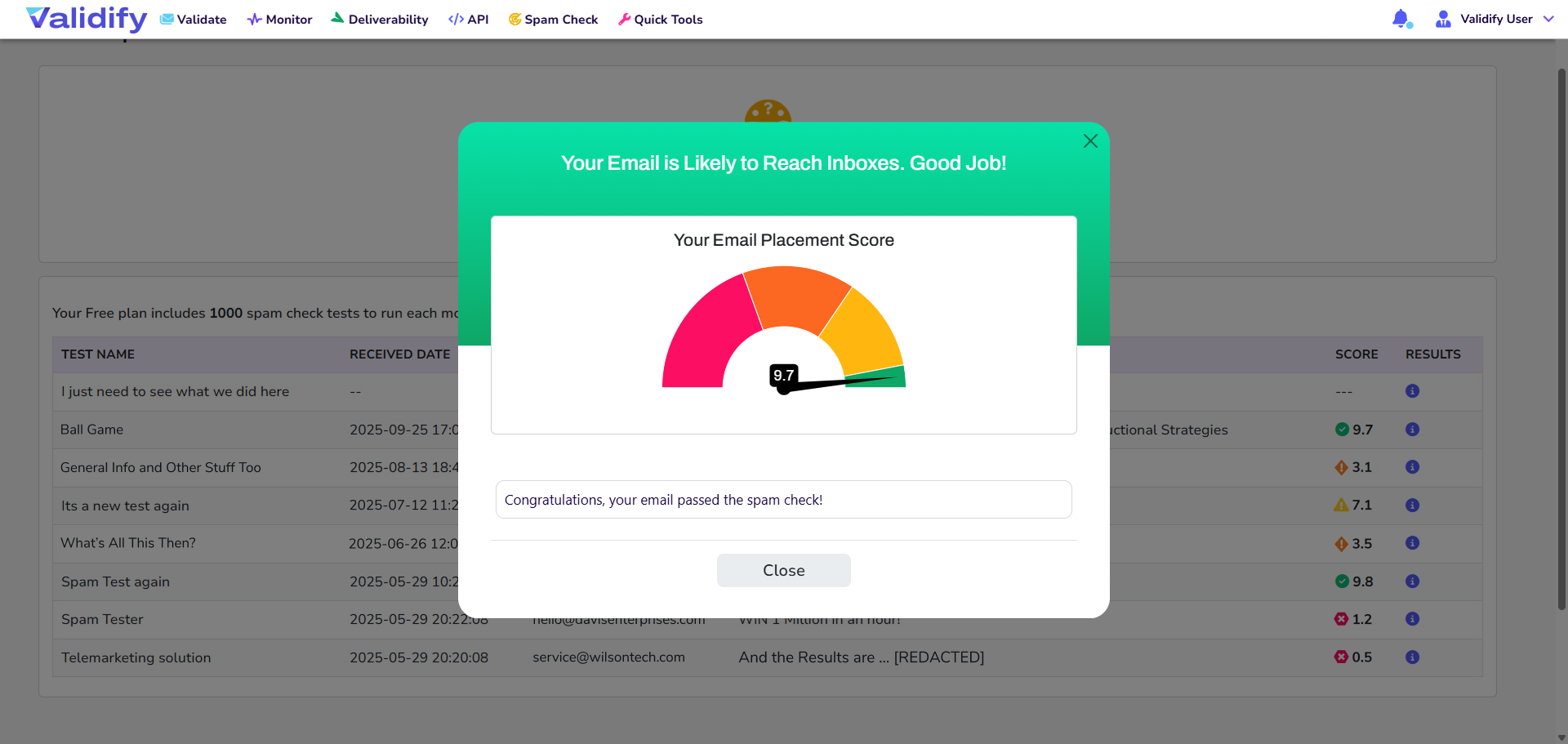
Spam score 1-10 gives clear actionable guidance to improve deliverability

Catch and Fix Content Issues Before You Hit Send

Powered by proprietary linguistic and AI technology, Validify’s Content Analysis scans your emails and assigns a spam risk score from 1 to 10—giving you clear, actionable guidance to improve deliverability before you ever hit send.


Start using Validify today to check for:

Spam score flags words, phrases and structures that trigger spam filters

Trigger Words & Formatting​

Flags words, phrases, and structures that commonly trigger spam filters.

Assess URL reputation and structure

Assesses URL reputation and structure to avoid deliverability penalties.

Detect technical red flags

HTML-to-Text Ratio & Hidden Elements

Detects technical red flags often overlooked in manual reviews.

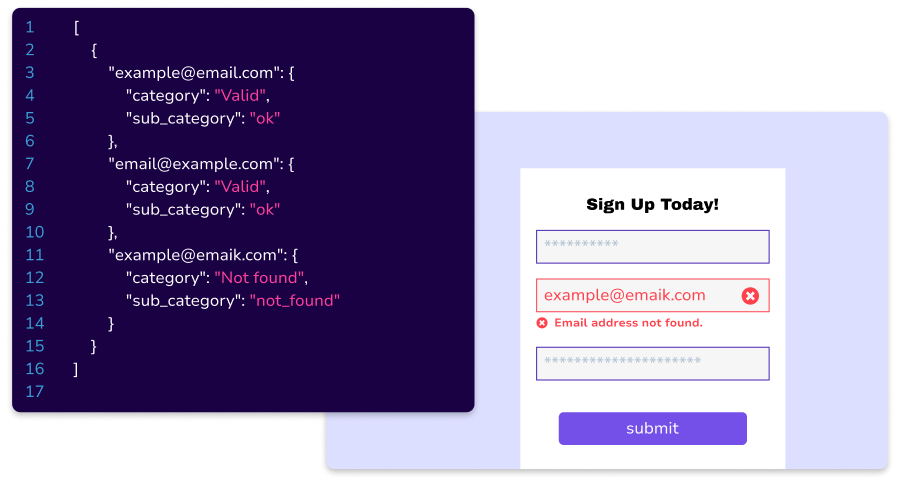
API integration to process, scan and score email content in real time

Automate Reviews with Our Content Analysis API

Make content analysis part of your standard workflow. Our API integrates seamlessly into your platform or process, scanning and scoring email content in real time—and delivering actionable feedback to help you improve with every send.

Common Questions

Validify scans your email for common deliverability risk signals (language/structure patterns, formatting flags, link risk, and technical content issues) and assigns a spam risk score from 1 to 10. The score is designed to be actionable: it highlights what to change before you send so your message is more likely to reach the inbox—not the spam folder.

Common content triggers include combinations of: overly aggressive promotional language, misleading phrasing, excessive capitalization/punctuation, heavy emphasis styling, “thin” body copy, and repetitive call-to-action patterns. Validify specifically flags trigger words and formatting patterns that commonly trip filters so you can adjust tone and structure without rewriting the entire campaign.

They can. Filters evaluate link safety signals and “suspicious” URL structures (multiple redirects, shorteners, mismatched domains, or low-reputation destinations). Validify’s Link Quality checks assess URL reputation and structure to help you avoid deliverability penalties tied to risky links.

The HTML-to-text ratio is the balance between code markup and readable text. Emails with extreme imbalance, sloppy HTML, or hidden/obscured elements can look machine-generated or deceptive to filters. Validify checks HTML-to-text ratio and hidden elements to surface technical red flags that are often missed in manual QA.

For bulk marketing/promotional mail, Gmail and Yahoo require one-click unsubscribe support via List-Unsubscribe headers (with an HTTPS option) consistent with RFC 8058; Gmail’s guidance explicitly points senders to RFC 8058 and clarifies that “mailto:” alone doesn’t meet the one-click requirement.
Content analysis helps by ensuring your templates consistently include compliant unsubscribe patterns and don’t introduce risky content/link behaviors that increase complaints (which is often what triggers enforcement).

Yes. The page offers a Content Analysis API that can scan and score email content in real time and return actionable feedback. Validify
High-impact use cases:

  • Pre-send “gating”: block or require approval for high-risk campaigns

  • Template QA: scan templates inside your builder before marketers publish

  • Deliverability guardrails: enforce link/domain rules, formatting standards, and unsubscribe compliance across teams