
Proven AI & Email Deliverability: What Senders, ESPs, and Mailbox Providers Do
Email deliverability isn’t just about avoiding spam words or picking a send time anymore. It’s about how your entire sending behavior is evaluated by AI-driven systems—from the tools you use to create campaigns, to how your ESP protects its network, to how mailbox providers decide what belongs in the inbox.
If you’ve ever felt like your deliverability is being judged by a secret tribunal, you’re not wrong. And increasingly, one of the loudest voices at that table is AI.
This article breaks down how AI is shaping deliverability across the ecosystem—and what it means for your strategy right now.
Why AI Matters for Email Deliverability
AI is now embedded in the email pipeline end-to-end. It’s not one tool or one filter—it’s a connected chain of systems evaluating:
- Identity and trust (domain authentication, alignment, reputation history)
- List quality (invalid addresses, spam traps, complaint-prone segments)
- Content and intent (patterns associated with abuse, scams, and low-value mail)
- User behavior signals (opens, clicks, deletions, spam reports, and engagement consistency)
- Sending patterns (volume spikes, irregular cadence, sudden audience shifts)
The practical takeaway: deliverability is behavior-based and model-driven. AI doesn’t just read your email—it interprets your patterns and predicts risk.
Key Terms: Senders, ESPs, and Mailbox Providers
Senders
Brands, organizations, and marketers who send email campaigns—newsletters, promotions, lifecycle journeys, transactional notifications, and B2B outreach.
ESPs
Email Service Providers and sending platforms that help you send. They also protect their networks from abuse, which directly impacts your deliverability.
Mailbox Providers (MBPs)
Inbox operators (Gmail, Microsoft, Yahoo, and others) that decide whether your email reaches the inbox, goes to spam, is throttled, or is rejected.
1) Senders: AI as a Powerful Assistant (and a Quiet Liability)
Most senders began with obvious AI use cases:
- Generate subject lines and preview text
- Create body copy faster
- Suggest segments and personalization
- Recommend send times
- Summarize performance and identify “what worked”
What’s more relevant to deliverability is how teams use AI to improve clarity, relevance, and consistency.
Under-the-radar ways smart senders use AI
- Voice consistency prompts: Paste winning copy and instruct AI to match tone, formatting, and structure—then rewrite for specificity.
- Clarity and intent testing: Ask “What does this email sound like to a first-time reader?” to detect confusing offers or overly aggressive language.
- Persona roleplay: Ask AI to respond as your subscriber persona to predict objections, confusion, or disinterest before you hit send.
- Click-motivation blurbs: Use AI to write short intros that tease value rather than summarize content—then edit to keep it human.
- Consistency checks across a sequence: Evaluate whether a multi-email journey stays coherent in tone and promise.
The risk: “AI slop” and predictable, low-value patterns
AI-generated content isn’t automatically bad for deliverability. The issue is generic content—copy that sounds polished but empty, repetitive, over-sanitized, or strangely uniform across campaigns.
Mailbox filters aren’t flagging “AI content.” They’re increasingly good at spotting low-value, low-engagement patterns. If AI helps you produce more emails that people ignore, you may train the ecosystem to treat your mail as unwanted.
How to use AI without hurting inbox placement
- Use AI for drafts, not decisions. The first output is rarely the best output.
- Add specificity. Concrete details outperform vague promises.
- Reduce fluff. Remove filler intros and generic hype that resembles mass mail.
- Match audience intent. Segment and send only what each group actually wants.
- Test for usefulness. Ask: “Would I want this email if I were the recipient?”
2) ESPs: AI as Guardian, Gatekeeper, and Deliverability Coach
ESPs aren’t just delivery pipes. They are deliverability actors with incentives to detect risk early, because one bad sender can damage shared infrastructure and impact everyone.
Many ESPs use AI to protect:
- Shared IP reputation
- Platform trust (scams, phishing, abuse)
- Compliance signals (unsubscribe expectations, complaint thresholds)
- Performance predictability (stopping risky campaigns before they cause damage)
What ESP AI systems commonly evaluate
- Pre-send content risk scanning: suspicious phrasing, impersonation patterns, risky formatting, inconsistent branding cues.
- Complaint and bounce risk prediction: using historical behavior, list patterns, and response signals.
- Anomaly detection: sudden changes in volume, audience, subject lines, link patterns, or cadence.
- Account compromise signals: campaigns that don’t match a sender’s normal style or profile.
- Reputation protection workflows: throttling, review queues, or warnings when risk is high.
Why this matters to your strategy
ESPs increasingly behave like early-warning systems. If your platform flags something as risky, it’s often a sign your program is drifting into patterns mailbox providers will punish.
3) Mailbox Providers: AI as the Final Gatekeeper and Behavior Analyst
Mailbox providers have always been the final decision-makers. Today, spam filtering is less about static rules and more about machine learning trained on user behavior.
Mailbox provider AI systems evaluate far more than “does this contain spam words?” They increasingly interpret:
- Engagement beyond opens: clicks, read time, quick deletion, “mark as spam,” “move to folder,” and “mark as not spam.”
- Reputation trends: changes in sending patterns, authentication posture, and consistency over time.
- Content modeling: predictable patterns that correlate with low-value bulk mail, scams, or aggressive acquisition.
- Audience mismatch: sudden mail to cold segments increases complaint and ignore signals.
- Identity consistency: “Does this look like the same sender with the same intent and same audience expectations?”
What mailbox providers are effectively asking
“Does this message feel like something this sender typically sends, to people like this, with results like that?”
If the answer is “no,” you may see spam placement, throttling, or silent filtering where performance drops without obvious errors.
The good news: consistent quality is rewarded
Mailbox provider AI doesn’t only punish bad behavior. It also rewards consistent, high-quality behavior:
- Clean lists and low bounce rates
- Stable sending cadence
- Clear identity (authentication + alignment)
- Low complaints and fast unsubscribes
- Strong engagement from the segments you email most
What This Means for Your Deliverability Strategy
AI is everywhere in email: upstream, downstream, and inside your workflow. Used wisely, it helps you write faster, test smarter, and catch problems earlier. Used carelessly, it helps you scale the patterns that get filtered.
The practical punch list
- AI is your assistant, not your boss. Great for ideation. Not a replacement for judgment.
- Generic copy is a deliverability risk. Low engagement trains filtering systems.
- List quality is non-negotiable. Invalids, traps, and cold segments create fast reputation damage.
- Authentication and alignment are table stakes. Weak identity makes everything harder.
- Mailbox providers score behavior, not intentions. What people do matters more than what you meant.
- Consistency wins. Spikes, random blasts, and sudden audience shifts increase risk.
How Validify Helps You Improve Deliverability (Without Guesswork)
Deliverability improves when you reduce negative signals before they reach mailbox providers. Validify helps you do that with a practical, proactive workflow.
Use Validify to reduce the most common AI-era deliverability risks
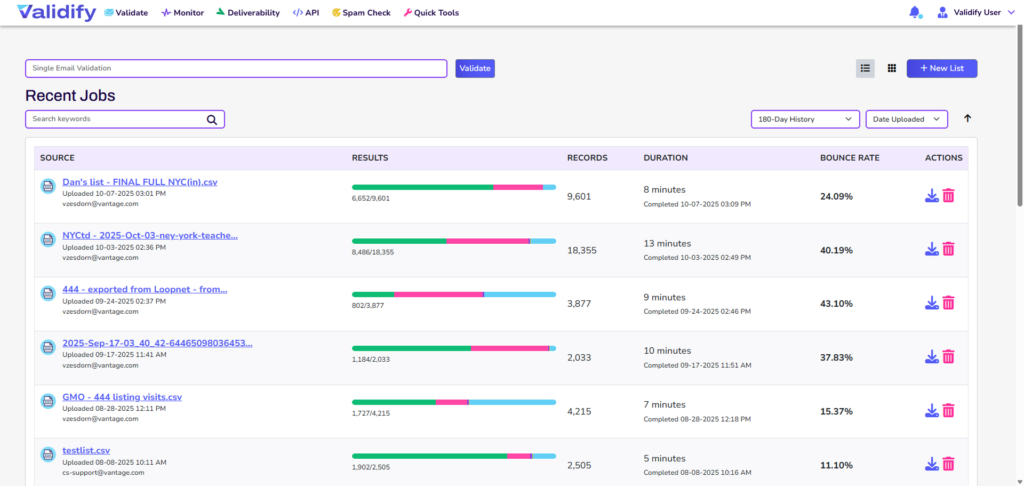
- Email validation: identify invalid and risky addresses before you send to reduce bounces and protect sender reputation.
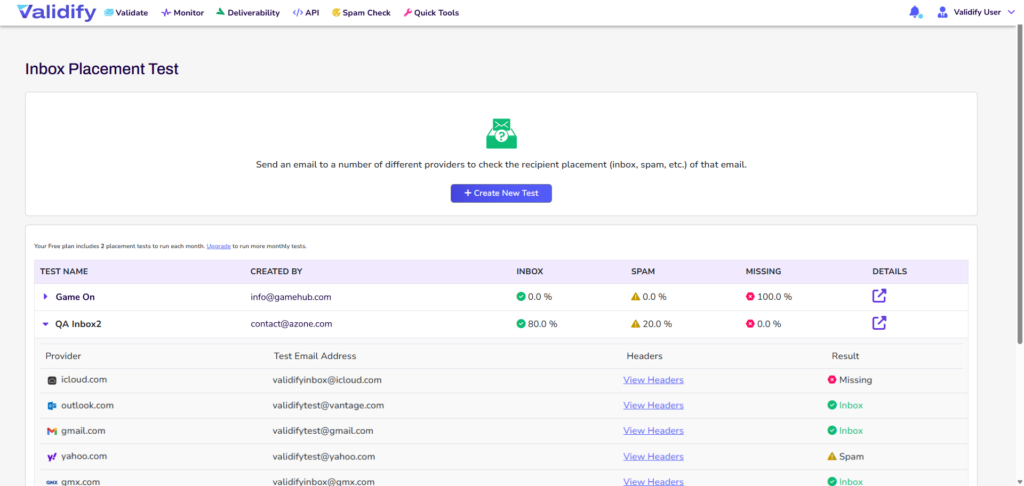
- Spam and content checks: catch patterns that commonly correlate with filtering and low engagement.
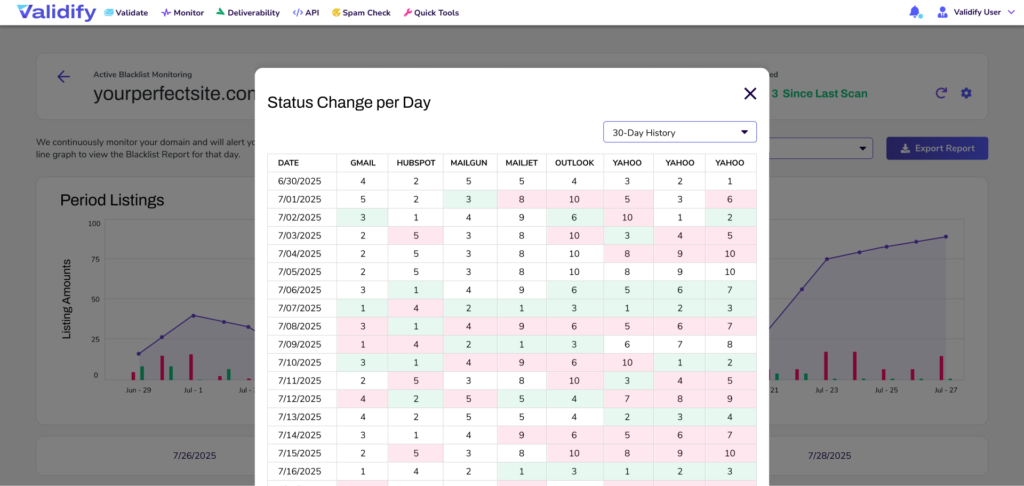
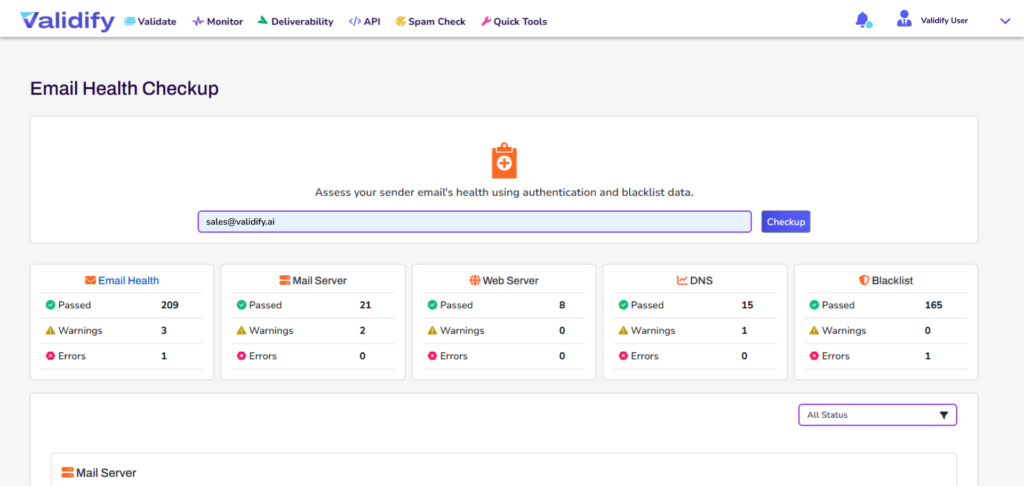
- Blacklist monitoring: detect reputation events early so you can respond before deliverability drops.
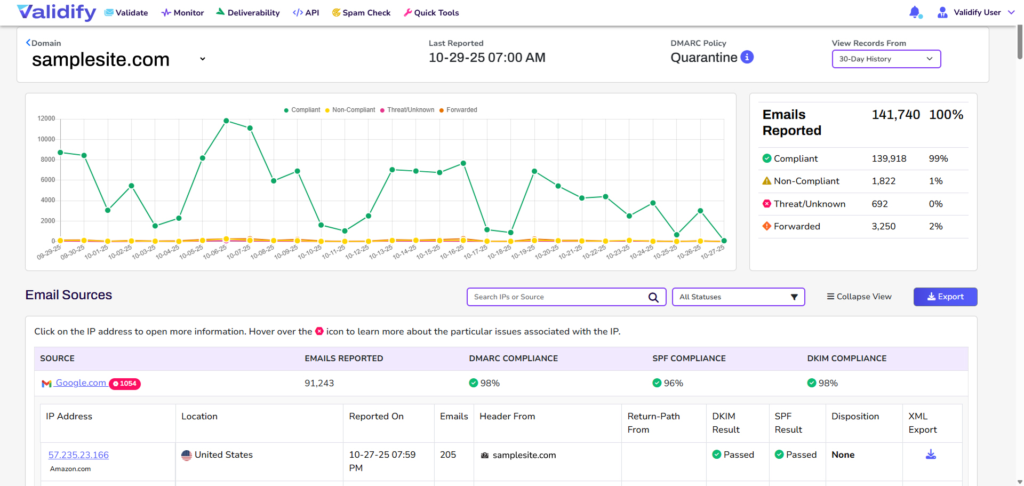
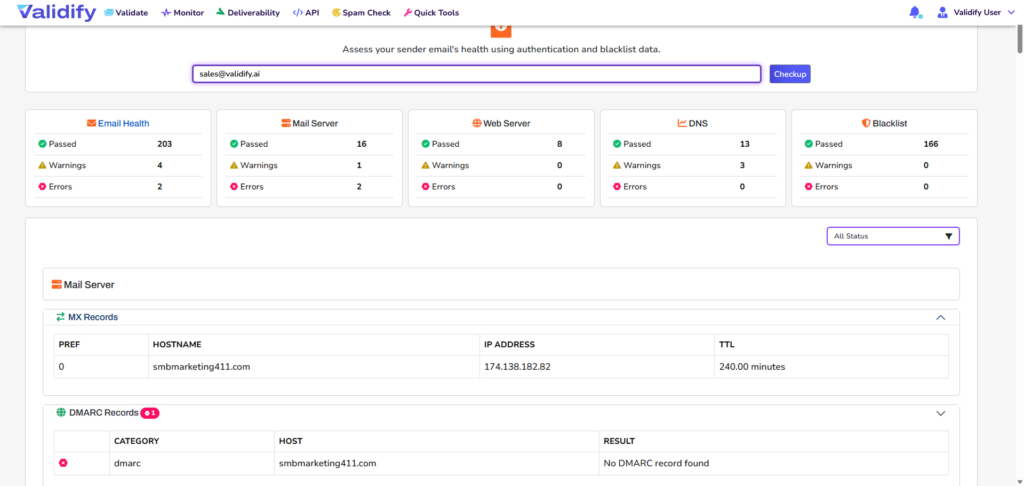
- Domain and IP health: monitor trust signals that mailbox providers use to evaluate consistency over time.
Final Thought: Write for Humans, Operate for Models
AI is now part of the deliverability chain. Your job is to communicate fluently to humans and operate responsibly within model-driven systems. You’re writing for readers—but you’re also being evaluated by behavior-based filters.
Know the game. Learn the rules. And don’t let automation do all the talking.
Try Validify
Want a clear, reliable way to protect your domain reputation and improve inbox placement? Try Validify to validate your lists, check content risk, and monitor domain and IP health—so you can send with confidence.
Quick sign up. No credit card required.