
Blacklist Monitoring

Stay Off Blacklists. Reach More Inboxes.

Validify’s Blacklist Monitoring keeps a constant eye on popular blacklists—alerting you the moment you’re added, so you can take action fast.

Blacklist monitoring keeps constant eye on popular blacklists

One Blacklist Can Block Thousands of Emails

Getting added to a blacklist can cause your email deliverability to plummet without your knowledge—causing well-intended messages to bounce or land in spam folders. Ongoing monitoring helps you catch issues early, protect your sender reputation, and avoid disruptions to client communication.

Real-Time Alerts. More Peace of Mind.

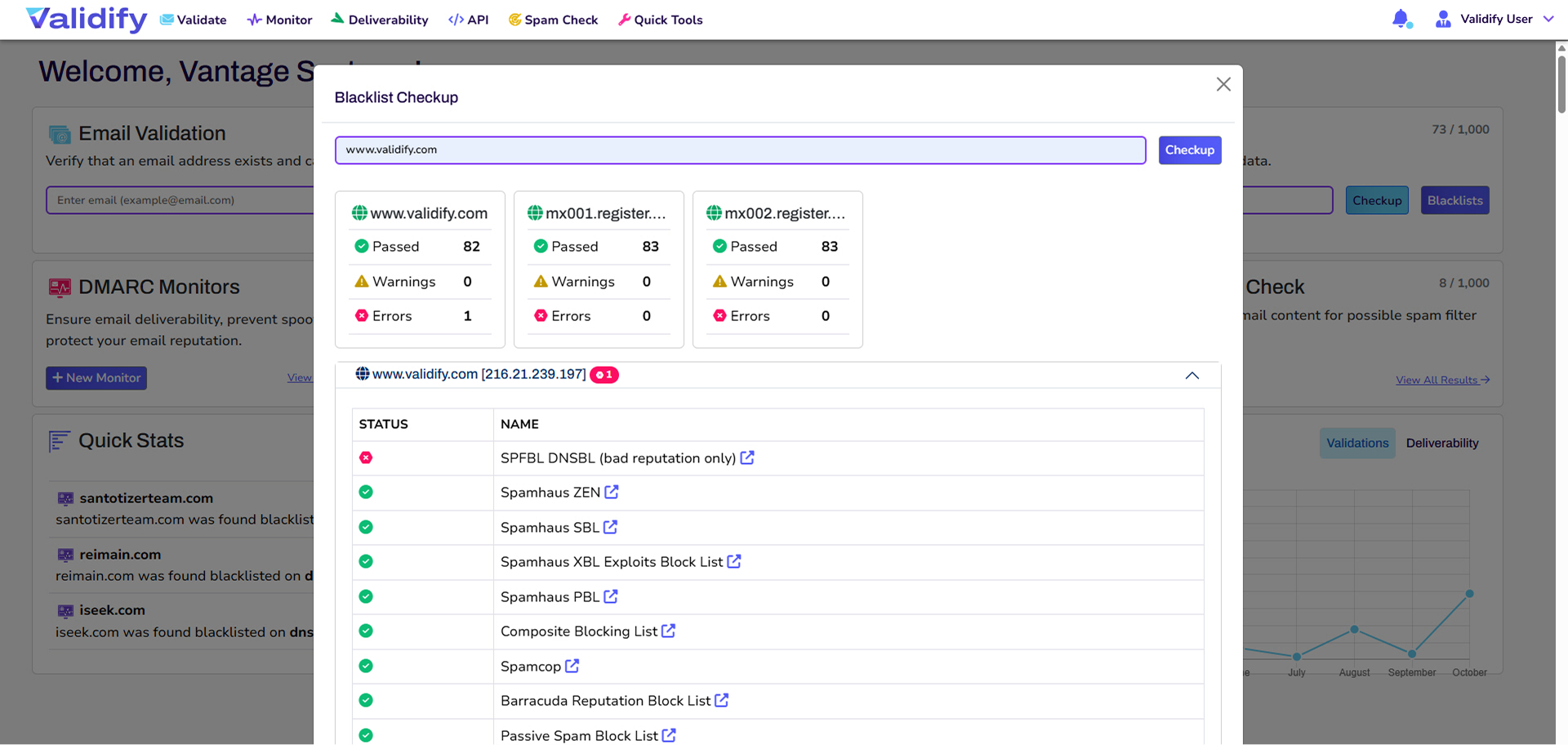
Validify continuously checks your domain and IP against more than 100 blacklists, including all major DNSBLs. If you’re flagged, we’ll notify you right away—and give you the tools to take immediate steps toward removal.
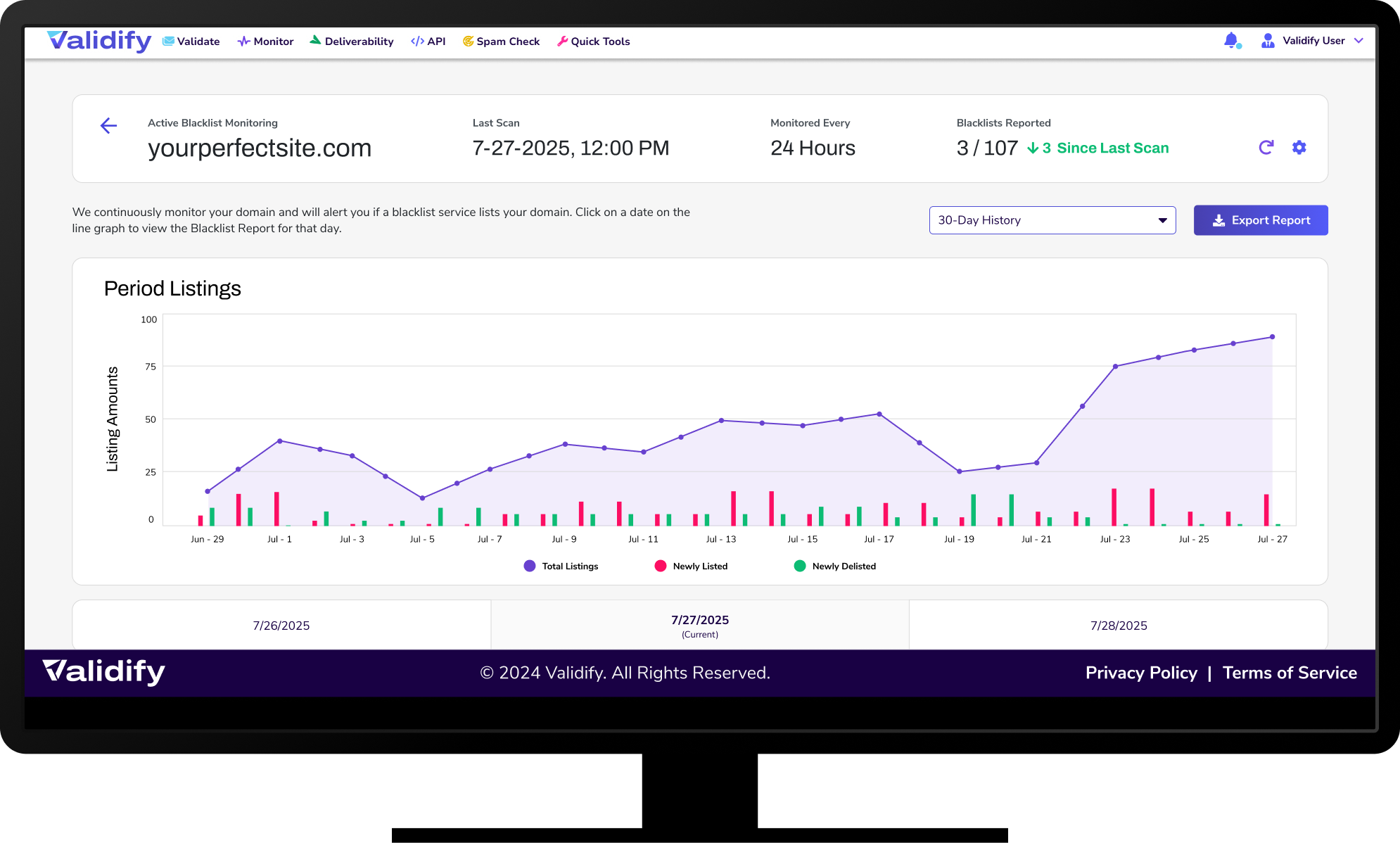
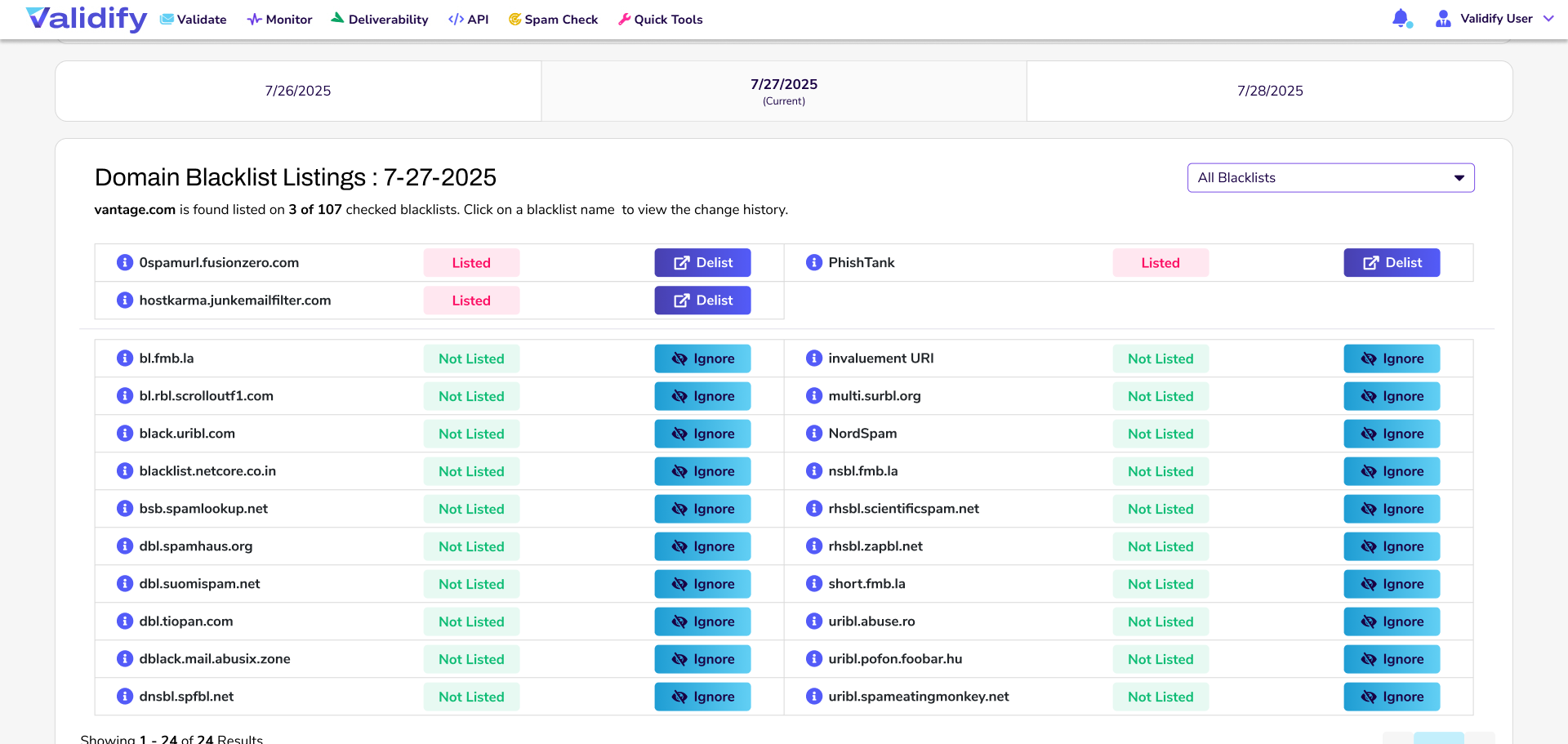
Continuosly check domain and IP against 100 blacklists
Track major DNSBL's and send real-time alerts
Continuous Monitoring

We track all major DNSBLs and send real-time alerts if your domain or IP address is flagged—so you can act quickly and protect inbox placement.

Instant Blacklist Checks

Need a quick audit? Run one-time blacklist scans anytime to assess your current status and confirm your infrastructure is in the clear.

one-time blacklist scans to validate current status
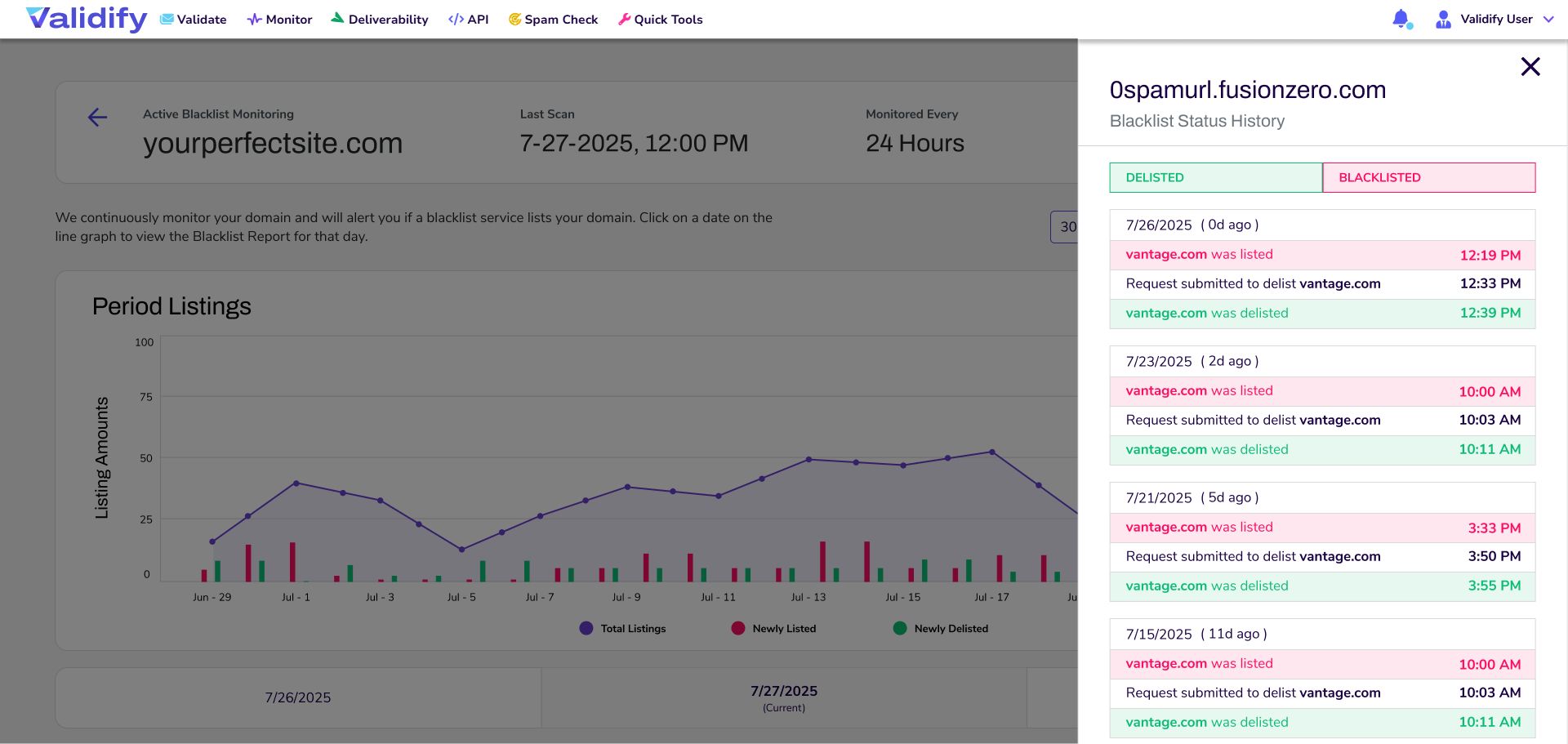
Blacklist insights, provider, listing date and details
Context-Rich Reporting

Get insights for every listing, including the blacklist provider, listing date, and other details—helping you understand and prioritize response.

Historical Trend Tracking

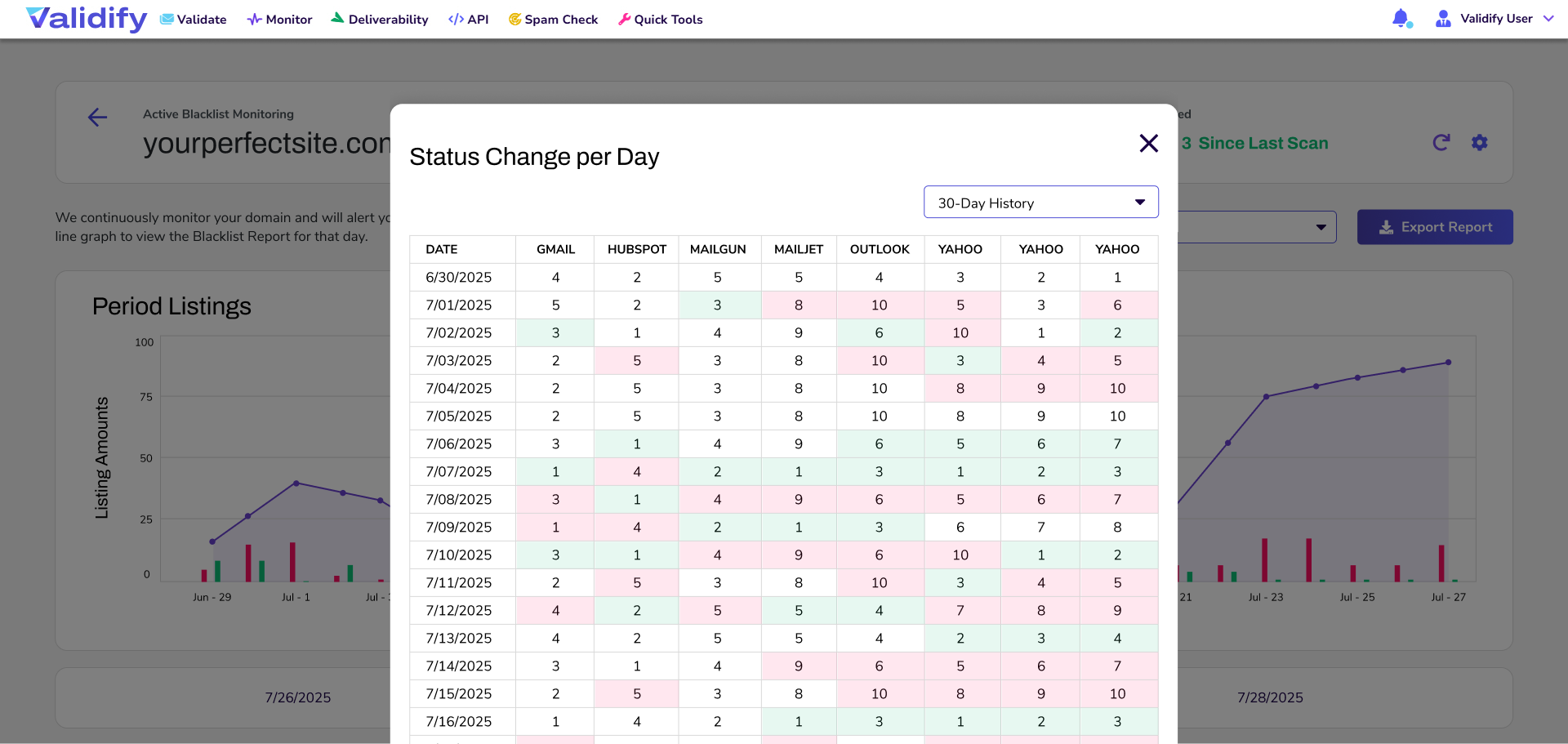
Spot patterns over time with historical data that highlights listing frequency, recurring issues, and progress across your sending environment.

Spot patterns over time with historical data
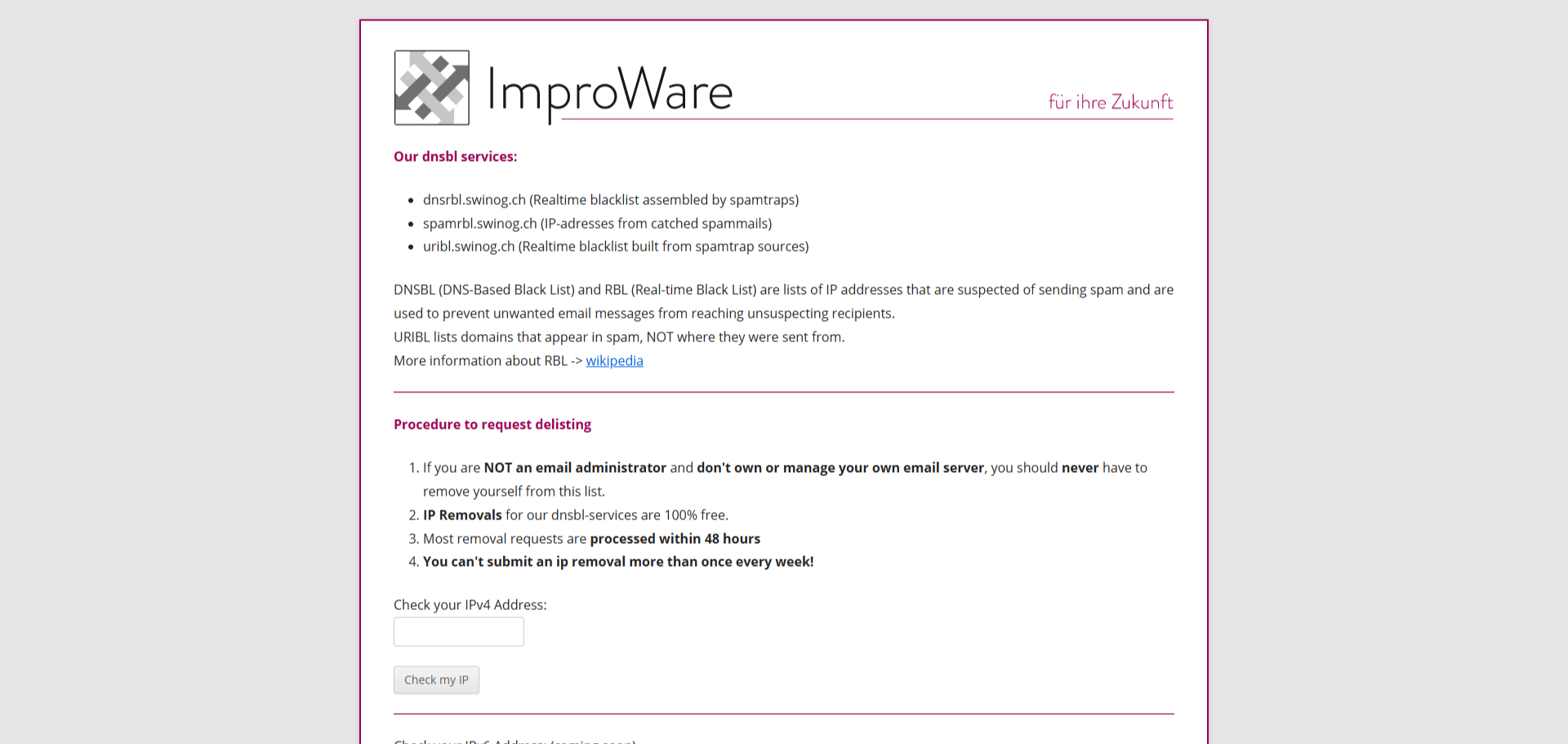
Delisting guidance, specific information to submit delisting requests
Delisting Guidance

When a listing occurs, we don’t leave you guessing. Get the specific information you need to submit delisting requests—so you can recover faster and reduce impact.

Common Blacklist Monitoring Questions

An email blacklist—often called a DNSBL (Domain Name System Block List) or RBL—is a list mail systems use to identify IPs (and sometimes domains) associated with spam or abusive sending. Many mail servers query these lists during delivery and may reject, throttle, or route messages to spam when a sender is listed.

A one-time blacklist check is a point-in-time snapshot. Blacklist monitoring is continuous: it watches your sending IP/domain over time and alerts you when a new listing occurs, so you can respond before deliverability damage compounds. Your page supports both continuous monitoring and on-demand scans.

Yes. Many providers and enterprise mail gateways use DNSBL data as part of filtering decisions, so a single listing can trigger broad blocking, increased bounces, or spam-folder placement across large recipient populations.

Typical triggers include spikes in unknown users/bounces, spam complaints, sending to recycled or pristine spam traps, compromised accounts sending unusual volume, poorly warmed IPs, and “bursty” campaigns that look like abusive behavior. (Monitoring helps you catch the outcome; hygiene and authentication help prevent it.)

Use this triage sequence:

  1. Pause or throttle sending from the affected IP/domain

  2. Check recent list uploads, sources, and acquisition methods

  3. Review bounce and complaint trends

  4. Confirm SPF/DKIM/DMARC alignment and recent DNS changes

  5. Remove risky segments and restart with a smaller, engaged cohort

  6. Submit delisting requests with remediation details
    (Items 3–4 are now table-stakes for major inbox providers.)

They don’t “prevent” blacklisting by themselves, but they strongly influence trust and enforcement at mailbox providers. Google’s sender guidelines explicitly require authentication, and for higher-volume senders they require DMARC and alignment expectations. When authentication is broken, reputation degrades faster and recovery is harder.

Yes, Validify checks domain and IP against 100+ blacklists and includes all major DNSBLs, with instant alerts when flagged.